 English
中文
English
中文


Common reasons that affect urine iodine determination
Urine iodine determination is a commonly used method for detecting iodine intake in the human body. However, in practical applications, many factors can affect the accuracy of urine iodine determination. The following are common reasons that affect urine iodine determination:
1. Dietary factors
The level will increase. Conversely, if a person's diet contains very little iodine, their urinary iodine level will decrease. Therefore, before conducting a urinary iodine test, it is necessary to understand the diet of the tested individual in order to more accurately assess their iodine intake.
The iodine content in the diet is one of the important factors affecting the determination of urinary iodine. If a person's diet contains a large amount of iodine, then his urinary iodine level
2. Drug factors
Certain medications can also affect the accuracy of urine iodine measurement. For instance, iodine-containing medications (such as potassium iodide) can elevate urine iodine levels, whereas certain medications (such as thiourea derivatives) can lower them. Hence, prior to conducting a urine iodine test, it is essential to ascertain whether the subject is taking any medications, in order to more precisely assess their iodine intake.
3. Age factor
Age is also one of the factors affecting urinary iodine determination. Infants and young children typically have lower urinary iodine levels because their iodine requirements are relatively lower.
On the contrary, the urinary iodine levels of adolescents and adults are usually higher due to their relatively greater iodine requirements. Therefore, before conducting urinary iodine measurement, it is necessary to understand the age of the tested individual in order to more accurately assess their iodine intake.
4. Gender factors
Gender is also one of the factors that affect urine iodine determination. The urine iodine level of women is usually higher than that of men, as women have a relatively greater iodine requirement. Therefore, before conducting urine iodine determination, it is necessary to understand the gender of the tested person in order to more accurately assess their iodine intake.
5. Disease factors
Certain diseases can also affect the accuracy of urine iodine determination. For example, hyperthyroidism can lead to elevated urine iodine levels, while hypothyroidism can result in decreased urine iodine levels. Therefore, before conducting urine iodine determination, it is necessary to understand whether the subject has any diseases, in order to more accurately assess their iodine intake.
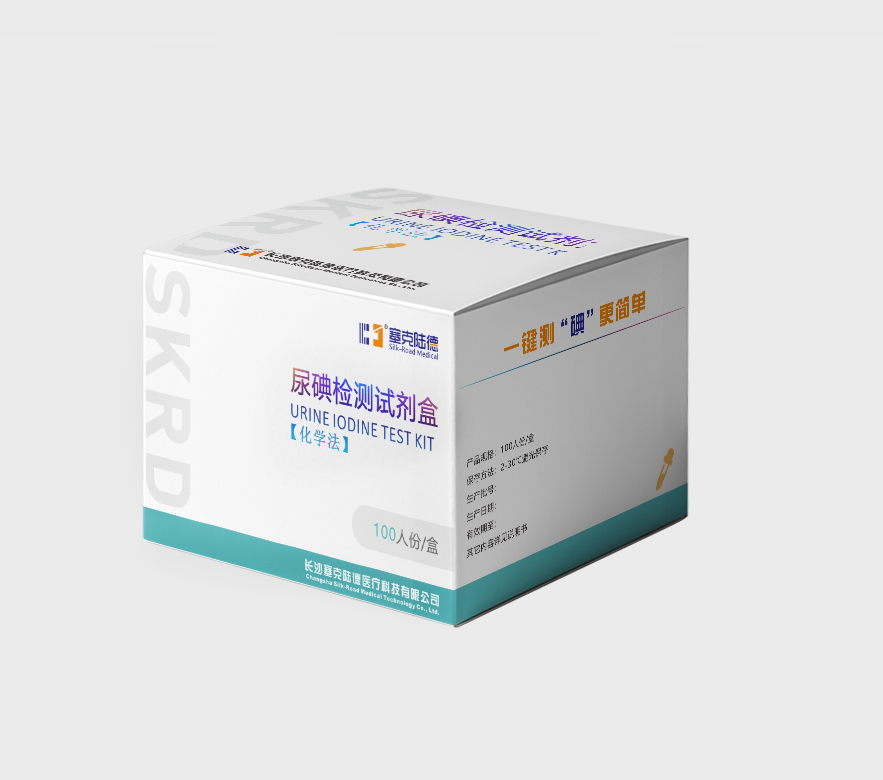
Silky-road urine iodine test kit which can accurently test iodine in urine,contact us.
Related recommendation
- 1.CMEF2020,Skrd unveiled second-generation products.
- 2.Skrd participates in 2021CACLP with second-generation products
- 3. Silky-Road Medical national clinical Laboratory Quality Assessment report in 2020 was 100% approved
- 4. Silky-Road Medical won the title of "High-tech Enterprise"
- 5.Skrd attended the 2020 CACLP exhibition and presented with patented products
- 6.Skrd attended the 2021 CMEF exhibition and presented with Iodine detection products
- 7.The importance of iodine for pregnant women
- 8.Skrd invite you to participate in the 18th China Association of Clinical Laboratory Practice Expo
- 9.Pregnancy Prepare for Urinary Iodine Test to Have a Healthy Smart Baby
- 10.How to choose automatic iodine detector?
- 11.Pregnant women are the key population for urinary iodine testing
- 12.Silky-Road Medical's 2019 China Clinical Laboratory Quality Evaluation Report was 100% passed
- 13. Silky-Road Medical's first national clinical Laboratory Quality Assessment report in 2020 was 100% approved
- 14.Skrd Medical's products have obtained the CE Conformity Certificate
- 15.Scientific Iodine Supplementation for Smarter Life
- 16.The neccessery of urinay iodine detection
- 17.Your hair loss may cause by iodine thyroid function
- 18.how to choose blood iodine test or urinary iodine test
- 19.Prevention and treatment Iodine deficiency
- 20.Sliky-road intelligemt automatic urinary iodine